

ANSWERING INDUSTRY NEEDS, POLINES CREATES SMART AUTONOMOUS MOBILE ROBOT
polines
Author
10
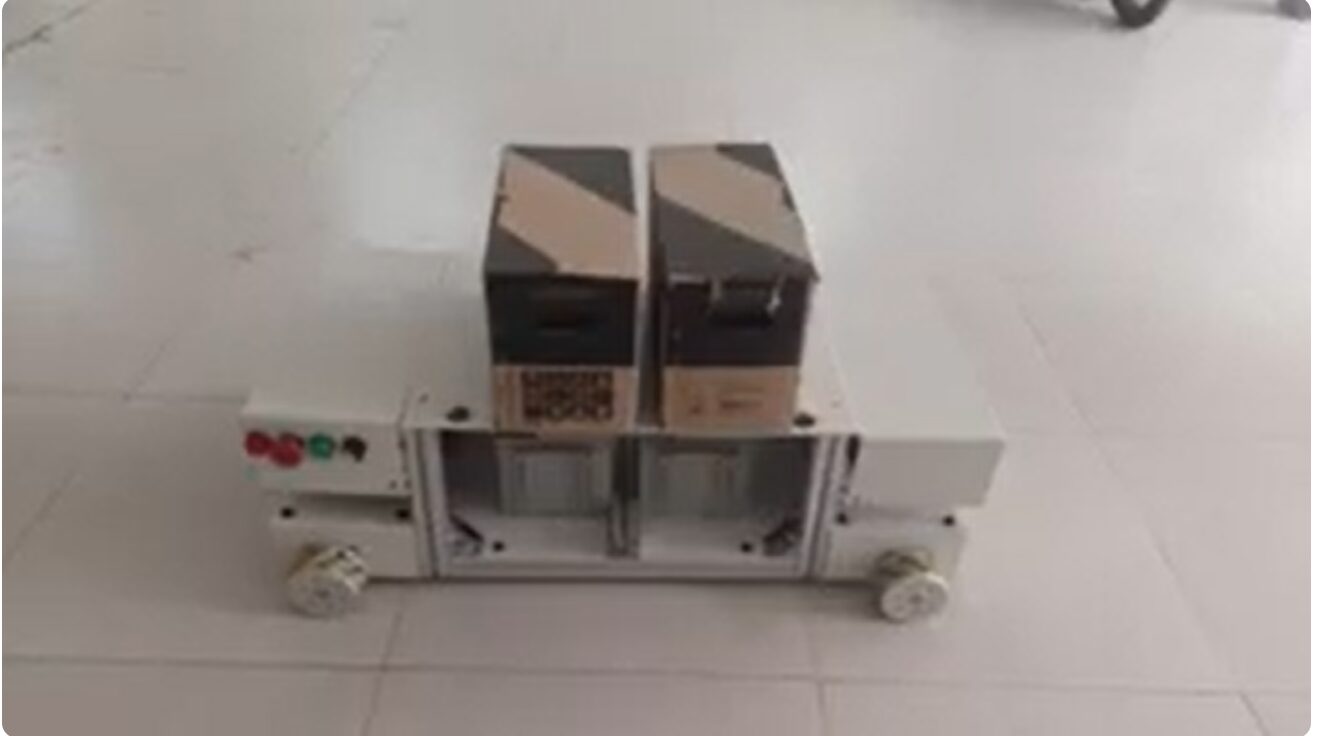
The need for Automatic Guided Vehicles (AGV) Robots which are used to transport or transport materials automatically without the need for a human driver are very much needed in industry. Say...
The need for Automatic Guided Vehicles (AGV) Robots which are used to transport or transport materials automatically without the need for a human driver are very much needed in industry. Unfortunately, most of these AGV robots still have to be imported from abroad. This is what prompted a team of lecturers from the Semarang State Polytechnic (Polines) to design the Smart Autonomous Mobile Robot or S-AMR.
The S-AMR robot developed by Polines is a type of AGV robot that is capable of carrying loads in the form of goods/materials automatically without using a human driver. It is hoped that the presence of the S-AMR robot can replace similar types of robots which are still often imported from abroad at much cheaper prices.
Polines' S-AMR robot team leader, Sihono, said that the development of S-AMR was part of the good practices of the 2023 Matching Fund program. This robot was developed by Polines together with PT Ruang Industri Indonesia as its industrial partner.
"This robot functions to deliver goods from one area in the industry to another area automatically without using lines/magnets," said Sihono as quoted from the Polines YouTube channel.
According to Sihono, this transport robot can move flexibly and independently based on mapping created using a screening leader on the robot. Thus, when applied in industry, this S-AMR robot does not require guidance in the form of lines or magnetic paths.
"This robot moves using the SLAM method to carry out mapping and navigation when moving in industrial areas. Apart from that, the robot can also be controlled and monitored remotely via the web," added Sihono.
When operated in industry, this robot is equipped with a number of sensors that can detect obstacles along the path it crosses. Both in the form of static obstacles and dynamic obstacles such as humans walking. In this way, the materials or goods carried by the robot will be safe and can reach the intended point.
Another advantage of this robot is the setup and monitoring process which can be done via the S-AMR website. Through this website, users can find out a number of settings, such as robot status to activate or deactivate the robot, battery status, robot location, and the results of mapping that has been carried out.
Apart from the prototype in the form of an S-AMR robot, another output from the Matching Fund program is an electromagnetic product test certificate issued by the Center for Telecommunication Equipment Testing (BBPPT). This testing is needed to ensure that the robot can work according to the standards for electronic devices and wireless communications found in Indonesia. (Polines/Nan/Cecep)
source: vokasi.kemdikbud.go.id