

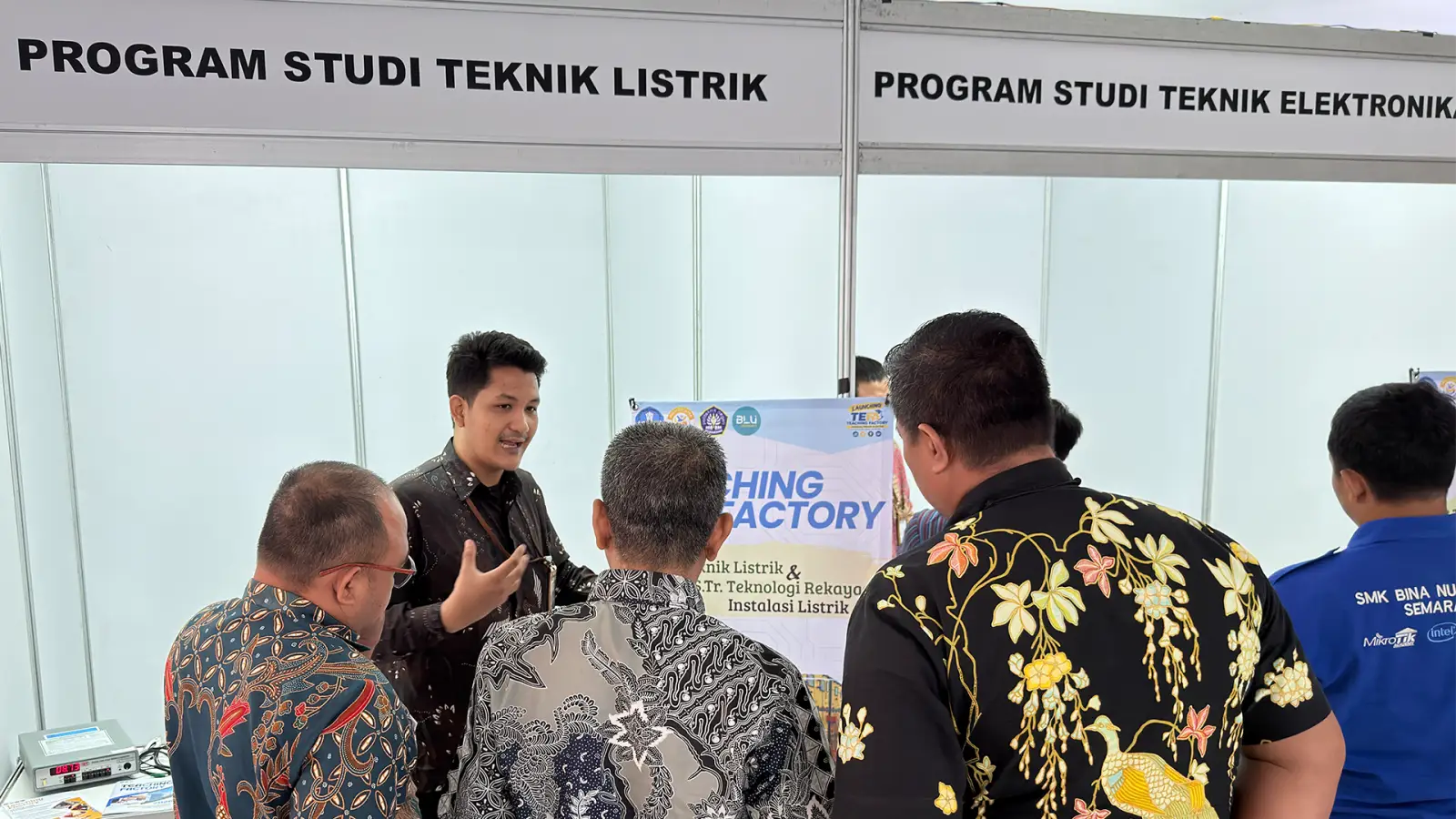
SEMARANG – As a tangible manifestation of the institution's commitment to producing graduates relevant to the needs of the workforce, Semarang State Polytechnic (Polines), through the Department of Electrical Engineering, officially launched its Teaching Factory (TEFA) on Thursday, November 12, 2026. This integrated learning facility is specifically designed to create an industrial ecosystem within the campus environment.
The inauguration ceremony was officially opened by the Vice Director for Planning, Finance, and General Affairs of Polines, Sahid, S.T., M.T. In his remarks, he emphasized the core essence of the establishment of TEFA within Polines.
"TEFA is a production-based learning model, where projects or industrial laboratory work are executed directly by students. This initiative bridges industrial needs with our course curriculum in a real manner," Sahid stated.
The main strength of the Department of Electrical Engineering's TEFA lies in its cross-disciplinary synergy. This ecosystem is fully supported by four collaborating flagship study programs: Telecommunication Engineering, Electronics Engineering, Electrical Engineering, and Informatics Engineering.
Through the synergy of these four study programs, Polines focuses not only on producing and selling project services to industry partners, but also provides an integrated training facility located directly on campus for Human Resources (HR) development. The quality of this training is highly guaranteed; for instance, the Electronics Engineering Teaching Factory facility already features a global-scale competency certification program resulting from a partnership with EFORTECH, a Energy Management System (EMS) company from Taiwan, which simultaneously ensures that its teaching lecturers hold international-standard certificates.
The Head of the Department of Electrical Engineering at Polines, Yusnan Badruzzaman, S.T., M.Eng., explained that student involvement in TEFA will be conducted systematically and progressively in accordance with the academic calendar.
"Students will handle industrial products or services in each semester of their studies. Along with their academic progression, the complexity of the projects they work on will become increasingly advanced in creation," Yusnan explained.
The implementation of learning that is linked and matched with the industry has proven to yield positive results. A clear example is students undertaking internships at major companies like Indofood. These students are not merely observers, but are directly challenged and guided to build and develop SCADA (Supervisory Control and Data Acquisition) systems.
The Teaching Factory launch event was lively and attended by all Study Program Coordinators within the Department of Electrical Engineering as well as various representatives from industry partners. Interestingly, the event also invited vocational high school (SMK) principals in Semarang City with Electrical Engineering departments, in the hope of fostering sustainable synergy and downstream integration from secondary vocational education and higher education to workforce placement.
Author : Aditya Putra
Editor : Juli Widiyanto