

POLINES LECTURER TURNS COTTON WASTE INTO A MICROSTRIP ANTENNA
polines
Author
15
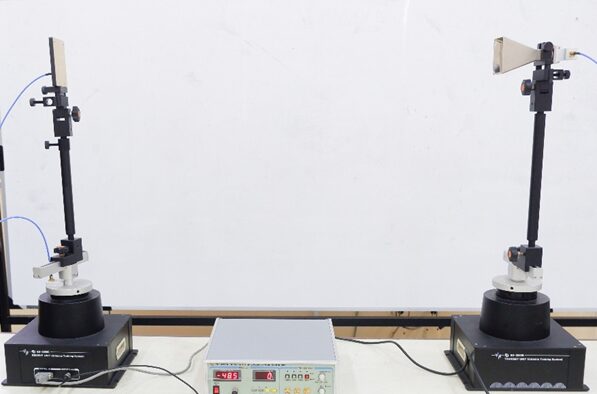
A team of Semarang State Polytechnic (Polines) lecturers succeeded in making a microstrip antenna using a dielectric substrate made from cotton and carbon fiber waste. This innovation is an alternative...
A team of Semarang State Polytechnic (Polines) lecturers succeeded in making a microstrip antenna using a dielectric substrate made from cotton and carbon fiber waste. This innovation is an alternative to using fiberglass – epoxy or FR4 which has been widely used in microstip antennas.
The microstrip antenna itself is a type of antenna made from a thin metal sheet placed on an insulating substrate. The use of microstrip antennas is very important in the world of telecommunications. This type of antenna is usually used on base transceiver stations (BTS) or transmitting stations.
Currently, most countries use FR4 substrate as microstrip antenna material. Apart from its cheap price, FR4 also has the characteristics of low water absorption and good insulation properties. The disadvantage of FR4 is that it does not have good tensile strength and can only withstand temperatures of 130° C.
For this reason, the Polines lecturer team led by Budi Basuki Subagio S. innovated by creating a microstrip technology antenna product using a dielectric substrate made from cotton-carbon fiber waste composite. Apart from being an alternative material to replace FR-4 substrate, this microstrip antenna made from carbon cotton fiber waste is also reliable, low cost and environmentally friendly.
Regarding this innovation, Budi Basuki said that in his research, the isolator substrate will be made from carbon cotton fiber waste, which is a natural fiber material made from cotton fiber. The fiber will then be reinforced with carbon fiber.
"This Microstrip Antenna is an alternative that will be used by our partner, namely PT Telkom Access, as a fiber optic back-up in remote areas. One of them is in Gir Pasang, Tegalmulyo Village, which is located on the slopes of Mount Merapi," said Budi Basuki.
For your information, this innovation carried out by Budi and his team is one of the good practices of the 2023 Vocational Matching Fund program involving PT Telkom Access as an industrial partner.
"Initially we identified the need and opportunity to use carbon cotton fiber waste material as an alternative material to replace FR4. We tried to conduct a review of the surrounding environment and existing needs in society, especially those related to fiber optic back up for internet networks," explained Budi.