
Polines Lecturer Receives Doctoral Degree, Develops WE-Gen.A Algorithm to Increase Energy Efficiency of Multi-UAV Systems
Humas Polines
Author
246
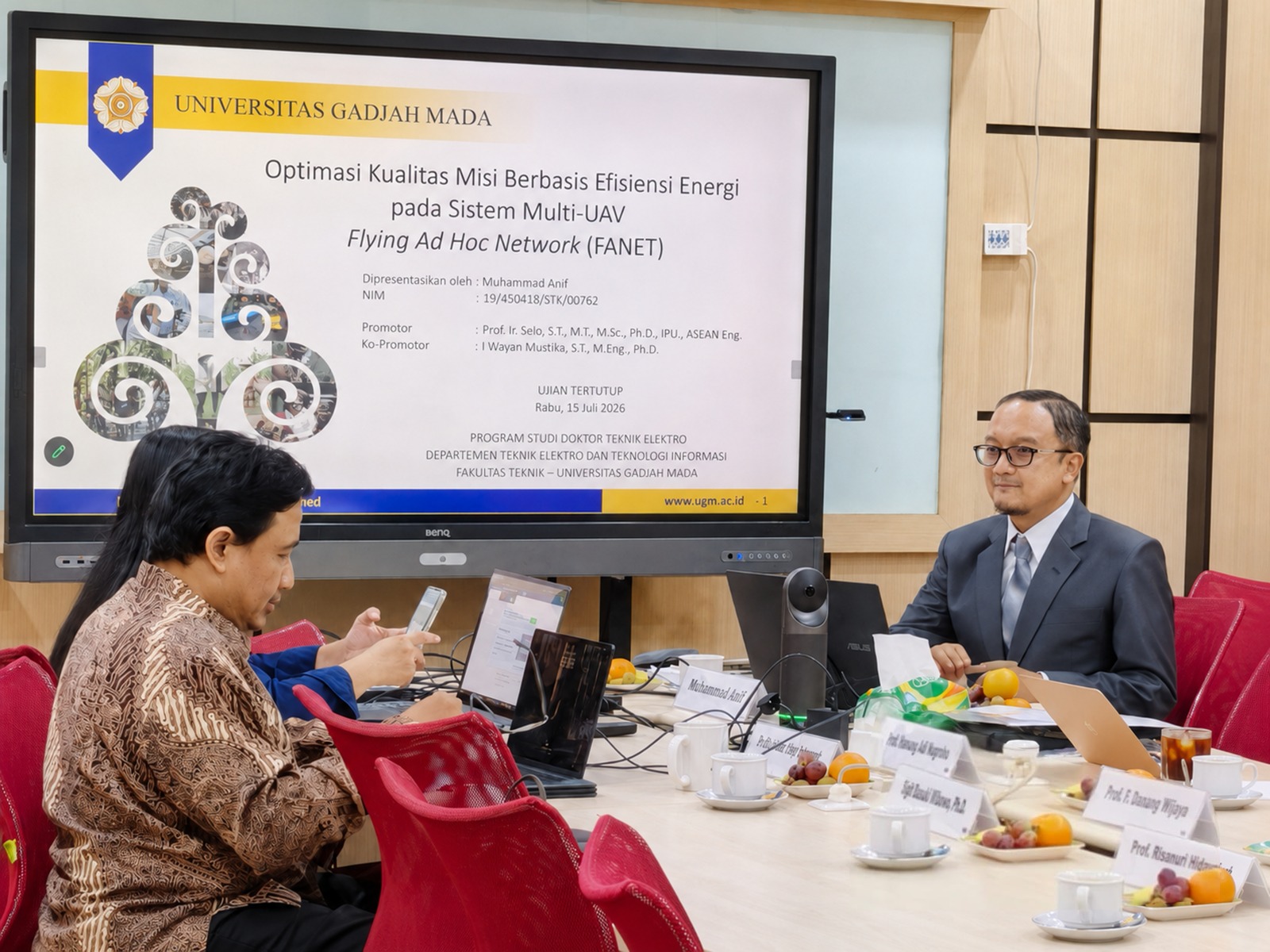
SEMARANG – Another proud achievement has been made by the Semarang State Polytechnic (Polines) academic community. Polines Electrical Engineering Department lecturer, Muhammad Anif, succeeded in obtaining the title of Doctor of Electrical Engineering...
SEMARANG – Another proud achievement has been made by the Semarang State Polytechnic (Polines) academic community. Polines Electrical Engineering Department lecturer, Muhammad Anif, succeeded in winning the title of Doctor of Electrical Engineering after defending his dissertation at the doctoral promotion session at the Department of Electrical Engineering and Information Technology, Faculty of Engineering, Gadjah Mada University (UGM), Wednesday (15/7/2026).
In his dissertation entitled "Optimization of Energy Efficiency-Oriented Multicriteria Mission Quality Index on Multi-UAV Systems in a Flying Ad-Hoc Network (FANET) Environment", Muhammad Anif presented an innovation in the form of a new optimization algorithm called Weighted Energy-aware Genetic Algorithm (WE-Gen.A). This algorithm was developed to improve the quality of mission implementation in multi-Unmanned Aerial Vehicle (multi-UAV) systems while still prioritizing efficient energy use.
This research is based on the increasing use of UAV or drone technology in various sectors, ranging from area monitoring, search and rescue of disaster victims, precision agriculture, infrastructure inspections, to data collection in hard-to-reach areas. In the midst of these developments, limited battery capacity is still a major challenge because it affects the duration of operations and the success of mission implementation.
As a solution, Muhammad Anif introduced the concept of the Mission Quality Index, namely a multi-criteria objective function that integrates five main indicators, including energy efficiency, completeness of observation area coverage (coverage completeness), success of data collection (data delivery reliability), equal distribution of workload between UAVs (UAV fairness), and equal service to observation points (Point of Interest fairness).
This approach allows the optimization process to not only be oriented towards energy savings, but also to maintain the overall quality of mission implementation. Thus, multi-UAV systems can work more effectively, efficiently and balanced in various operational conditions.
Through various simulation scenarios, the WE-Gen.A algorithm shows superior performance compared to a number of existing methods, such as Random Assignment, Greedy, Multi-Robot Genetic Algorithm (MR-GA), Energy-Balanced Genetic Algorithm (EB-GA), and Non-dominated Sorting Genetic Algorithm II (NSGA-II). The research results show that the algorithm developed is able to produce a more optimal balance between energy efficiency and mission quality compared to previous methods.
Muhammad Anif explained that it is hoped that this research can become the basis for the development of smarter and more efficient multi-UAV coordination systems, especially in applications that require long-term autonomous operation with limited energy sources.
"The Mission Quality Index concept developed in this research is expected to be the basis for the development of multi-UAV optimization algorithms that not only pursue energy efficiency, but also consider overall mission success. This approach has the potential to be applied to various UAV applications in the future," said Muhammad Anif.
Apart from providing scientific contributions in the field of multi-UAV system optimization and Flying Ad-Hoc Network (FANET), the results of this research are also considered relevant to the development of next-generation communications technology that integrates UAVs as part of smart network infrastructure.
Muhammad Anif's success in obtaining a doctorate is clear evidence of Semarang State Polytechnic's commitment to encouraging improvements in the quality of human resources, strengthening the culture of research and innovation, and producing scientific work that has an impact on the development of science, technology and societal progress. Through this achievement, Polines continues to emphasize its role as a vocational college that is superior, innovative and contributes to answering future technological challenges. ang
Polines Public Relations
Semarang, August 4 2026
In his dissertation entitled "Optimization of Energy Efficiency-Oriented Multicriteria Mission Quality Index on Multi-UAV Systems in a Flying Ad-Hoc Network (FANET) Environment", Muhammad Anif presented an innovation in the form of a new optimization algorithm called Weighted Energy-aware Genetic Algorithm (WE-Gen.A). This algorithm was developed to improve the quality of mission implementation in multi-Unmanned Aerial Vehicle (multi-UAV) systems while still prioritizing efficient energy use.
This research is based on the increasing use of UAV or drone technology in various sectors, ranging from area monitoring, search and rescue of disaster victims, precision agriculture, infrastructure inspections, to data collection in hard-to-reach areas. In the midst of these developments, limited battery capacity is still a major challenge because it affects the duration of operations and the success of mission implementation.
As a solution, Muhammad Anif introduced the concept of the Mission Quality Index, namely a multi-criteria objective function that integrates five main indicators, including energy efficiency, completeness of observation area coverage (coverage completeness), success of data collection (data delivery reliability), equal distribution of workload between UAVs (UAV fairness), and equal service to observation points (Point of Interest fairness).
This approach allows the optimization process to not only be oriented towards energy savings, but also to maintain the overall quality of mission implementation. Thus, multi-UAV systems can work more effectively, efficiently and balanced in various operational conditions.
Through various simulation scenarios, the WE-Gen.A algorithm shows superior performance compared to a number of existing methods, such as Random Assignment, Greedy, Multi-Robot Genetic Algorithm (MR-GA), Energy-Balanced Genetic Algorithm (EB-GA), and Non-dominated Sorting Genetic Algorithm II (NSGA-II). The research results show that the algorithm developed is able to produce a more optimal balance between energy efficiency and mission quality compared to previous methods.
Muhammad Anif explained that it is hoped that this research can become the basis for the development of smarter and more efficient multi-UAV coordination systems, especially in applications that require long-term autonomous operation with limited energy sources.
"The Mission Quality Index concept developed in this research is expected to be the basis for the development of multi-UAV optimization algorithms that not only pursue energy efficiency, but also consider overall mission success. This approach has the potential to be applied to various UAV applications in the future," said Muhammad Anif.
Apart from providing scientific contributions in the field of multi-UAV system optimization and Flying Ad-Hoc Network (FANET), the results of this research are also considered relevant to the development of next-generation communications technology that integrates UAVs as part of smart network infrastructure.
Muhammad Anif's success in obtaining a doctorate is clear evidence of Semarang State Polytechnic's commitment to encouraging improvements in the quality of human resources, strengthening the culture of research and innovation, and producing scientific work that has an impact on the development of science, technology and societal progress. Through this achievement, Polines continues to emphasize its role as a vocational college that is superior, innovative and contributes to answering future technological challenges. ang
Polines Public Relations
Semarang, August 4 2026
Photo Gallery (1 foto)
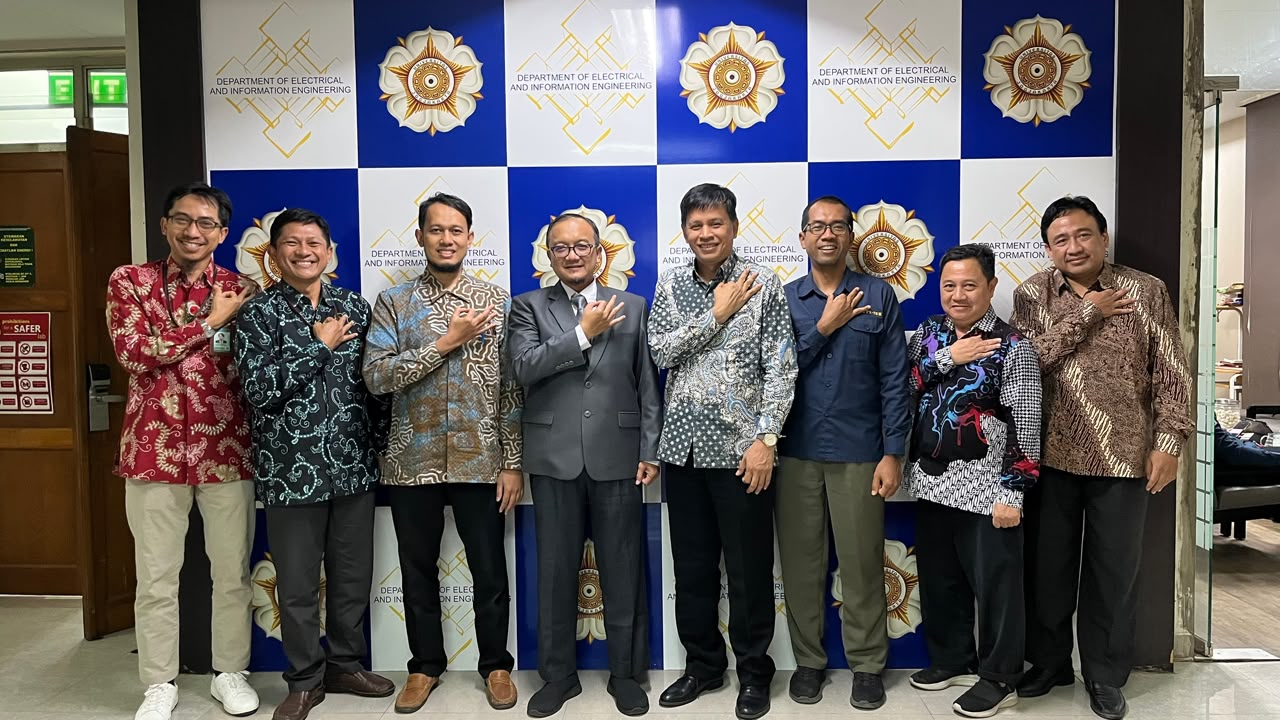
Klik untuk perbesar